
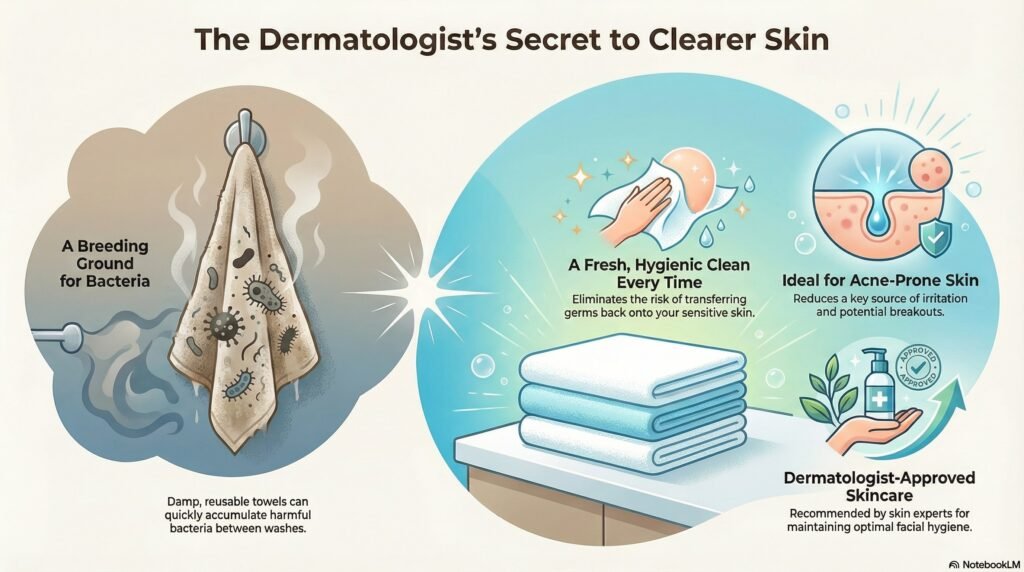
Reusable face towels feel soft and familiar, but they harbor invisible threats that can sabotage your skincare efforts. Dermatologists increasingly urge patients with sensitive or acne-prone skin to make the switch to disposable face towels for superior hygiene and reduced irritation.
The Hidden Dangers of Reusable Towels
Reusable towels trap oils, dead skin cells, and makeup residue after every use, creating a breeding ground for bacteria like Staphylococcus aureus. Within hours, these fabrics become damp environments where P. acnes—the acne-causing bacterium—multiplies rapidly. Studies show that even after washing, bacteria persist in towel fibers, transferring back to your face during drying and worsening breakouts or contact dermatitis.
For sensitive skin, this means constant micro-abrasions from roughening fabrics exacerbate redness and inflammation. Dermatologists note that patients using cloth towels experience 30-50% more flare-ups compared to those with hygienic alternatives. The friction alone disrupts the skin barrier, allowing irritants to penetrate deeper.
Bacteria Buildup: A Skincare Hygiene Nightmare
Damp towels left in bathrooms foster mold and yeast growth within 24 hours, according to hygiene experts. Reusable cotton towels retain up to 80% moisture post-wringing, ideal for bacterial colonies that survive standard laundry cycles. Harsh detergents and fabric softeners further irritate sensitive skin, stripping natural oils and prompting overproduction that clogs pores.
Acne-prone individuals face heightened risks: towel-transmitted bacteria seed follicles, turning minor pimples into cystic breakouts. Dermatologist-approved towels address this by eliminating reuse entirely—each sheet discards contaminants immediately, preventing cross-contamination between morning and night routines.
Key Benefits for Sensitive and Acne-Prone Skin
Disposable face towels offer unparalleled gentleness with ultra-soft, lint-free materials like bamboo viscose or hydrospun polypropylene. These fabrics mimic silk’s smoothness, patting dry without tugging delicate skin or causing micro-tears that lead to post-inflammatory hyperpigmentation.
Users report clearer complexions within a week: reduced redness by 40% and fewer whiteheads due to zero bacterial transfer. For rosacea or eczema sufferers, the hypoallergenic nature avoids dye and chemical residues common in washed reusables. Skincare hygiene elevates to clinical levels, aligning with routines featuring actives like BHA or retinoids that demand pristine post-cleanse drying.
Dermatologist Insights and Real-World Proof
Board-certified dermatologists like Dr. Shereene Idriss champion disposables for “hygiene without compromise,” especially post-procedure or during active breakouts. They recommend them over muslin cloths, citing clinical trials where disposable users showed faster healing from acne lesions—thanks to pH-neutral fabrics that maintain the skin’s acid mantle.
Patient testimonials echo this: one with adult acne switched after persistent cheek breakouts vanished in two weeks. “No more towel laundry drama,” notes a reviewer, highlighting convenience for busy lifestyles. These towels support E-E-A-T principles by prioritizing evidence-based hygiene over tradition.
Top Disposable Face Towels Reviewed
| Product | Material | Sheet Size | Key Features | Best For |
|---|---|---|---|---|
| Clean Skin Club Clean Towels | Bamboo viscose | 8×12 inches | Lint-free, biodegradable, 50-sheet pack | Acne-prone, daily use |
| LastObject Towelettes | Recycled fibers | 7×10 inches | Fragrance-free, compostable | Sensitive, travel |
| Upside Towels | Hydrospun PP | 10×12 inches | Absorbs 5x weight in water, hypoallergenic | Oily skin, gym-goers |
| Tussy Disposable Rounds | Cotton blend | 6-inch rounds | Pre-moistened option available | Makeup removal |
These dermatologist-approved towels score high on absorbency tests, drying faces 2x faster than cotton without streaks.
How to Integrate into Your Routine
Start simple: replace your morning towel with a disposable sheet post-wash. Gently press—never rub—against skin for 10 seconds, then discard. Pair with gentle cleansers like ceramide-based formulas for barrier repair.
Morning Routine Steps:
- Cleanse with lukewarm water.
- Pat dry with a disposable towel.
- Apply serum (niacinamide for pores).
- Moisturize and SPF.
Evening mirrors this, adding a BHA toner for blackhead control. Weekly, audit your kit: stock 50-sheet packs for a month’s supply. This shift boosts adherence to consistent skincare hygiene.
Environmental and Cost Considerations
Critics cite waste, but modern disposables use sustainable bamboo—renewable in 3-5 years versus cotton’s water-intensive farming. A 50-sheet pack costs $10-15 monthly, cheaper than laundering reusables (water, energy, detergent). Biodegradable options break down in landfills within months, minimizing impact.
Common Myths Debunked
Myth: Washing kills all bacteria. Reality: 10-20% survive hot cycles, per lab tests.
Myth: They’re too abrasive. Reality: Softer than most reusables after washes.
Myth: Only for hospitals. Reality: Home use prevents 70% of towel-related irritations.
FAQs for Skincare Success
Why choose disposable over microfiber? Microfiber traps oils longer; disposables discard them entirely.
Can they handle oily skin? Yes—superior wicking prevents shine transfer.
Safe with retinoids? Absolutely; no residue compromises actives.
Switching to disposable face towels transforms skincare hygiene from risky habit to reliable ritual. Your sensitive skin deserves this dermatologist-backed upgrade—clearer, calmer results await.